
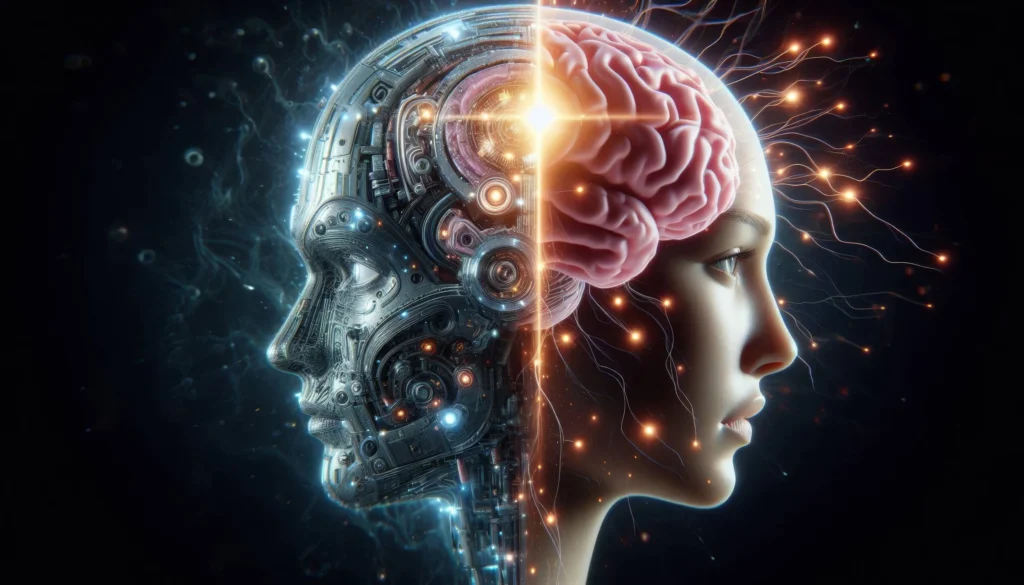
AI vs Human Intelligence
Artificial Intelligence (AI) and human intelligence are often compared because technology is becoming a big part of our daily lives. AI can do many tasks quickly, like analyzing data or giving recommendations, which earlier only humans could do.
Human intelligence comes naturally. Humans think, feel emotions, learn from life experiences, and make decisions based on values and understanding. AI, on the other hand, is created by humans. It works based on data, rules, and patterns and does not have feelings or emotions.
Simply put, AI is fast and accurate, while humans are creative and emotional. Understanding the difference helps us see how AI can support humans instead of replacing them.
What Is Artificial Intelligence?
Artificial Intelligence (AI) is the ability of machines to think and act like humans. It helps computers learn from data, understand information, and make decisions without needing constant human instructions.
In simple words, AI makes machines smart. It is used in everyday things like voice assistants, search engines, recommendations on apps, and chatbots. AI works fast, handles large amounts of data, and helps make life easier by automating tasks.
Key Points About Artificial Intelligence:
- AI helps machines think, learn, and make decisions
- It works by analyzing data and patterns
- AI does not have emotions or feelings
- It performs tasks faster and more accurately than humans
- AI is used in daily life like voice assistants, chatbots, recommendations, and search engines
- It helps automate repetitive tasks and save time
These features make AI a powerful tool that supports humans in everyday activities.
How AI Thinks and Learns
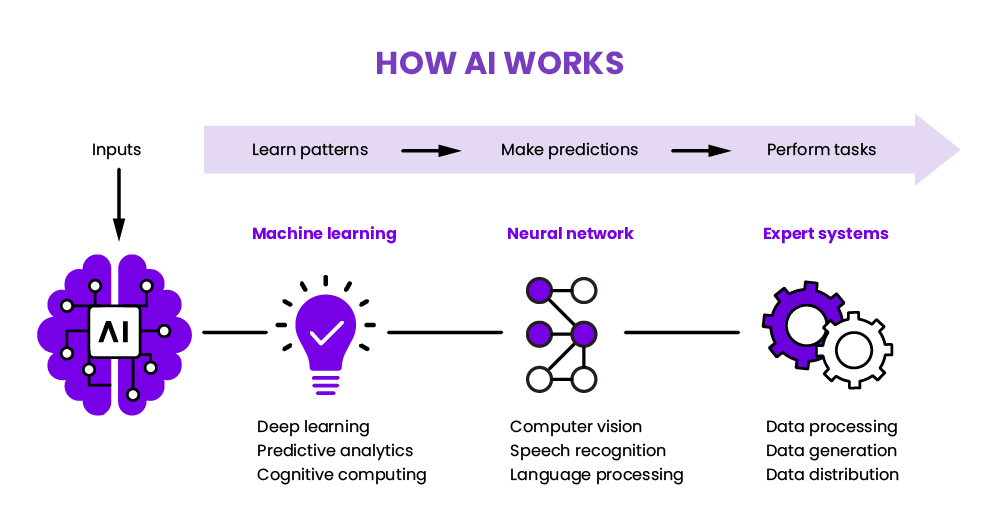
AI does not think like humans. Instead, it learns by studying data and finding patterns in it.
Simply explained:
- AI learns from large amounts of data
- It uses algorithms (step-by-step rules) to find patterns
- AI improves by learning from mistakes
- The more data it gets, the better it performs
- AI makes decisions based on logic and probabilities, not emotions
This is how AI slowly becomes smarter and more accurate over time.
What Is Human Intelligence?
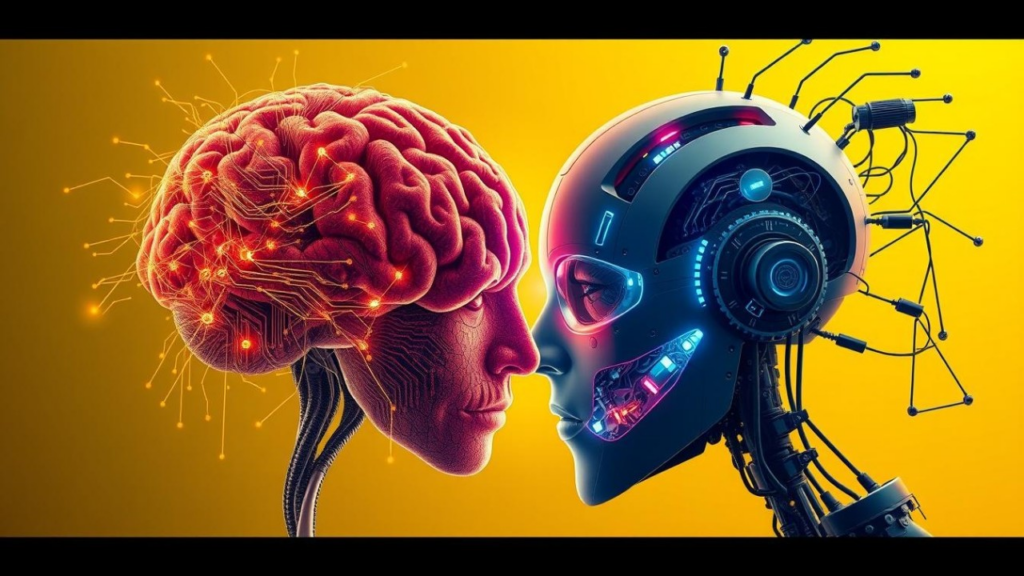
Human intelligence is the natural ability of people to think, understand, learn, and make decisions based on experience and emotions.
In simple terms, human intelligence is how humans use their mind.
Key Points About Human Intelligence:
- Humans learn from life experiences
- It includes emotions, feelings, and empathy
- Humans can think creatively and imagine new ideas
- Decisions are based on values, ethics, and emotions
- Humans can easily adapt to new situations
This is what makes human intelligence unique and different from Artificial Intelligence.
How Humans Learn and Think
Humans learn and think in a natural and flexible way, shaped by experiences, emotions, and surroundings.
Simply explained:
- Humans learn from experience and observation
- Emotions play a big role in thinking and decision-making
- Humans use logic, intuition, and creativity together
- Learning happens through mistakes and feedback
- Humans can adapt quickly to new and unexpected situations
This ability to combine thinking, feeling, and creativity makes human intelligence truly unique.
Key Differences Between AI and Human Intelligence
Artificial Intelligence and human intelligence may seem similar, but they work in very different ways. Understanding these differences helps us know what AI is good at and where humans are still better.
Learning Ability
- AI learns from data and training
- Humans learn from life experiences and emotions
Creativity
- AI follows patterns and existing information
- Humans create original ideas and imagine new things
Emotions and Feelings
- AI has no emotions or empathy
- Humans feel emotions and understand others
Decision Making
- AI makes decisions based on logic and data
- Humans use logic along with values and ethics
Adaptability
- AI needs retraining to handle new situations
- Humans adapt naturally and quickly
In short, AI is powerful with data, while humans are powerful with emotions and creativity.
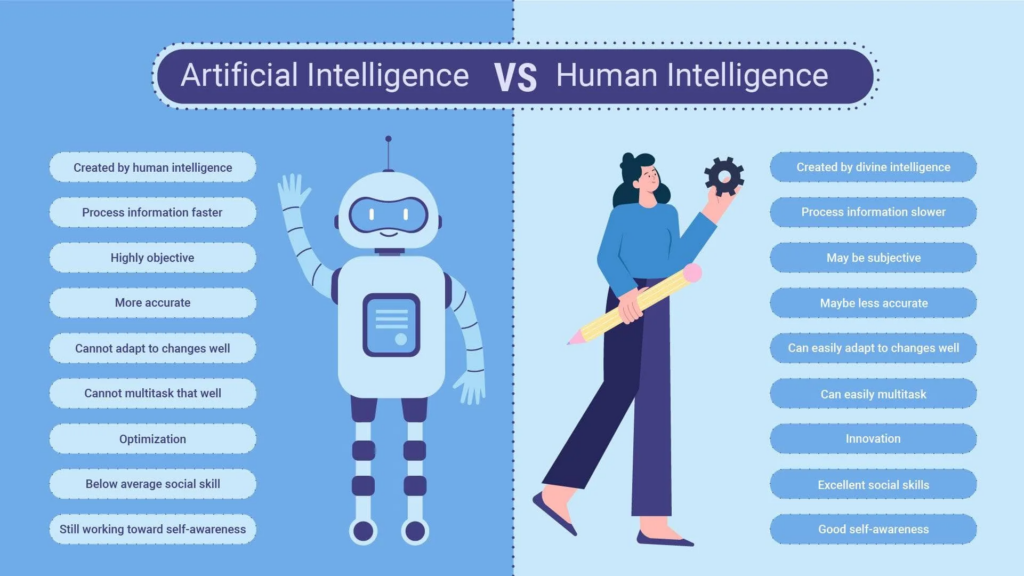
AI vs Human Intelligence: Comparison Table
The table below shows the main differences between Artificial Intelligence and human intelligence in a simple and clear way.
| Feature | Artificial Intelligence (AI) | Human Intelligence |
|---|---|---|
| Learning | Learns from data and training | Learns from experience and life |
| Speed | Very fast processing | Slower compared to AI |
| Accuracy | High accuracy with data | Can make mistakes |
| Creativity | Limited, pattern-based | Highly creative and original |
| Emotions | No emotions or feelings | Has emotions and empathy |
| Decision Making | Based on logic and data | Based on logic, values, and emotions |
| Adaptability | Needs retraining | Adapts naturally |
| Fatigue | Works 24/7 without tiredness | Gets tired and needs rest |
This comparison clearly shows that AI and humans have different strengths, and they work best when used together.
Advantages of AI Over Humans
Artificial Intelligence has certain advantages over humans, especially when it comes to speed, accuracy, and handling large amounts of data.
Speed and Accuracy
- AI can process huge amounts of data in seconds
- It makes fewer errors in repetitive tasks
Works Without Tiredness
- AI can work 24/7 without breaks
- Performance stays consistent over time
Handles Repetitive Tasks
- AI is ideal for routine and boring work
- Reduces human workload
Data-Based Decisions
- AI makes decisions based on facts and data
- No emotional bias
These advantages make AI very useful for businesses, technology, and daily applications where efficiency matters most.
Speed and Accuracy
AI processes huge data quickly without fatigue.
Repetitive Tasks
AI works 24/7 without tirednes
Advantages of Humans Over AI
Even though AI is powerful, humans still have many strengths that machines cannot replace.
Emotional Intelligence
- Humans understand emotions and feelings
- Can show empathy and build relationships
Creativity and Imagination
- Humans create original ideas
- Think beyond data and patterns
Moral and Ethical Thinking
- Humans make decisions based on values and ethics
- Can judge right and wrong
Adaptability and Common Sense
- Humans adapt quickly to new situations
- Use common sense in daily life
These abilities make humans unique and irreplaceable, even in an AI-driven world.
Emotional Intelligence
Humans understand feelings and relationships.
Moral and Ethical Thinking
Humans make value-based decisions.
Can AI Replace Human Intelligence?
This is one of the most common questions people ask today. The simple answer is no, AI cannot fully replace human intelligence.
AI is very good at handling data, doing repetitive work, and working fast without getting tired. But it cannot feel emotions, think creatively like humans, or make moral decisions. Human intelligence includes empathy, imagination, and values—things AI does not have.
Instead of replacing humans, AI works best as a support tool. When humans and AI work together, they can achieve better results than either can alone.
Jobs and Automation
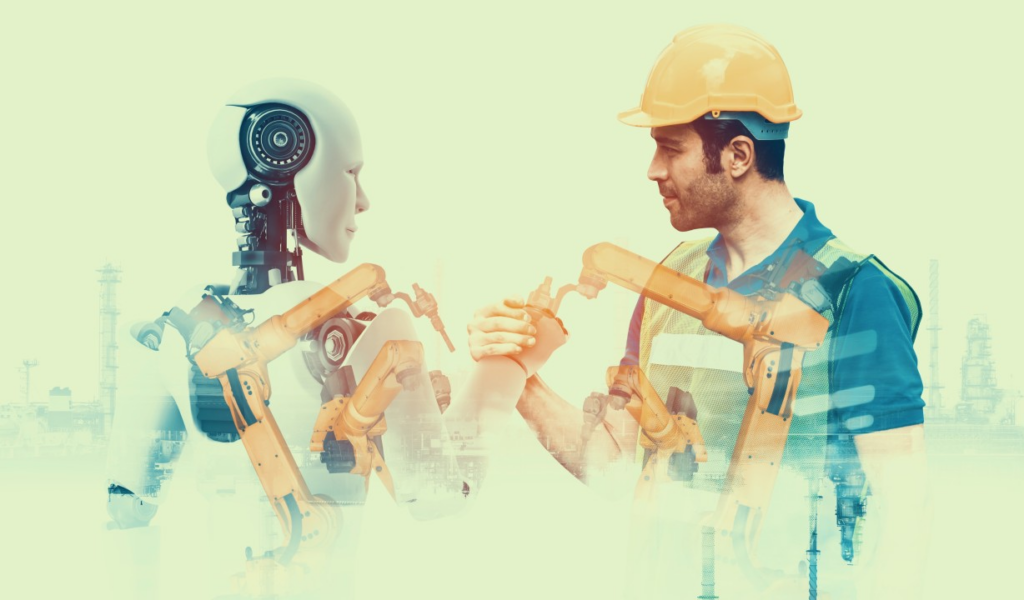
AI and automation are changing the way people work, but they are not replacing all jobs.
Simply explained:
- AI can replace repetitive and routine tasks
- Jobs involving data entry and basic analysis are most affected
- New jobs are being created in AI, technology, and data fields
- Human skills like creativity, communication, and leadership are still important
- AI helps people work faster and smarter, not jobless
So, automation changes jobs—but humans remain essential in the workforce.
Future of AI and Human Intelligence
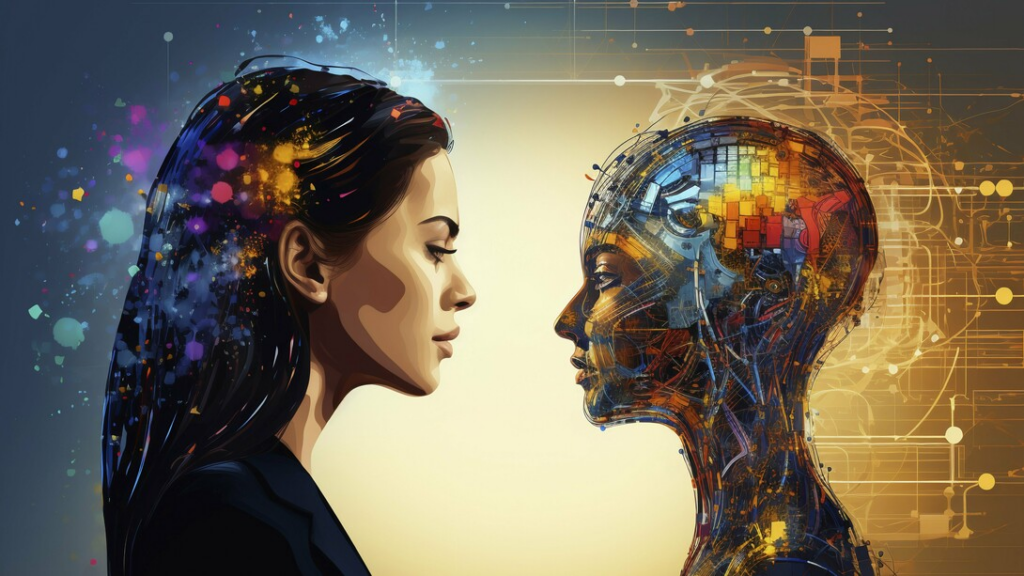
The future of AI and human intelligence is not about competition, but working together.
AI will continue to grow and help humans in areas like healthcare, education, and business. It will handle data-heavy and repetitive tasks, allowing humans to focus on creativity, decision-making, and problem-solving.
Humans will guide AI using ethics, values, and common sense. In the future, the strongest results will come when AI supports human intelligence, not replaces it.
Conclusion
Artificial Intelligence and human intelligence each have their own strengths. AI is fast, accurate, and excellent at handling large amounts of data, while humans are creative, emotional, and capable of ethical thinking.
Rather than replacing humans, AI works best as a support system that helps people do their jobs better. The future belongs to a world where AI and humans work together, combining technology with human values to create smarter and more meaningful outcomes.
Next blog: Can AI Replace Human Jobs? Truth Explained
Pingback: Top AI Myths and Facts You Should Know - Logic Layers