
The Reality of AI and the Workforce: Job Displacement vs. Human Augmentation
The Numbers: Why “Mass Unemployment” is a Myth
Job Displacement: The Shift from Routine to Cognitive Labor
Artificial Intelligence has triggered a profound transformation across global industries. By integrating robotic process automation (RPA) and intelligent algorithms, AI has begun automating high-volume, repetitive tasks in the manufacturing and service sectors. While this has led to localized disruption and the loss of traditional roles, it is important to view this through the lens of economic evolution.
Just as the introduction of the calculator did not eliminate mathematicians but rather empowered them to solve more complex problems, AI is not a “job killer” in the absolute sense. Instead, we are witnessing a massive reallocation of talent. The “truth” is that while old roles vanish, a new frontier of high-value careers is emerging in Data Science, Neural Network Architecture, and Generative AI Engineering. The goal isn’t the total replacement of humans, but the elimination of “drudge work.”
Human Augmentation: The “Cyborg” Approach to Productivity
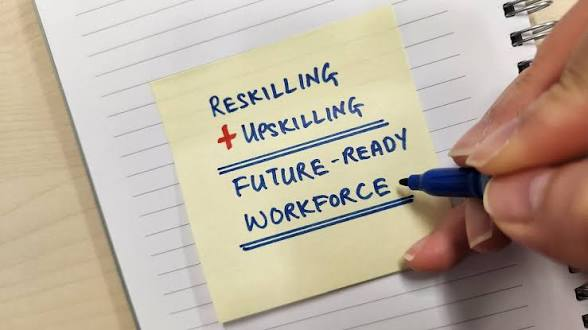
Rather than mere replacement, the true power of AI lies in Human Augmentation—the process of using technology to enhance human potential. This shift has forced a global reskilling revolution, where the workforce is upgrading its capabilities to stay relevant.
This synergy has led to a dramatic spike in operational efficiency and performance. For example, in Web Development, AI-powered pair programmers (like GitHub Copilot or advanced LLMs) allow developers to bypass boilerplate coding and focus on high-level system architecture and user experience (UX) innovation.
By offloading cognitive loads to AI, professionals can focus on strategic decision-making and creative problem-solving, effectively turning every worker into a “force multiplier.”
High-Risk vs. Low-Risk: Which Industries are Truly Vulnerable?
The rapid growth of Artificial Intelligence (AI) is transforming industries across the world. While AI creates new opportunities, it also raises concerns about job displacement and industry vulnerability. Some industries are at high risk of automation, while others remain low risk due to their dependence on human creativity, empathy, and complex decision-making.
High-Risk Industries (More Vulnerable to AI)
hese industries involve repetitive, rule-based, or data-driven tasks, which AI can perform efficiently.
1. Data Entry & Clerical Work
- Repetitive data processing
- Automated by AI and software bots
- Reduced need for human intervention
2. Customer Support (Basic Level)
- Chatbots handle FAQs and basic queries
- Voice bots manage simple calls
3. Manufacturing & Assembly Lines
- Robots perform repetitive physical tasks
- Faster and more accurate than humans
4. Content Writing (Basic/Generic)
- AI can generate simple articles and descriptions
- Low-skill content creation is at risk
5. Accounting & Bookkeeping (Basic Tasks)
- AI automates calculations and data analysis
- Entry-level roles are more affected
Low-Risk Industries (Less Vulnerable to AI)
These industries rely heavily on human judgment, creativity, emotional intelligence, and complex thinking.
1. Healthcare
- Doctors, nurses, and therapists require empathy
- AI supports but cannot replace human care
2. Education & Teaching
- Human interaction and mentoring are essential
- AI acts as an assistant, not a replacement
3. Creative Fields
- Designers, artists, filmmakers, writers
- Creativity and originality remain human strengths
4. Leadership & Management
- Decision-making, strategy, and people management
- Requires human understanding and ethics
5. Skilled Trades
- Electricians, plumbers, technicians
- Physical, situational work is hard to automate
The Rise of “Agentic AI”: Moving from Tools to Co-Workers
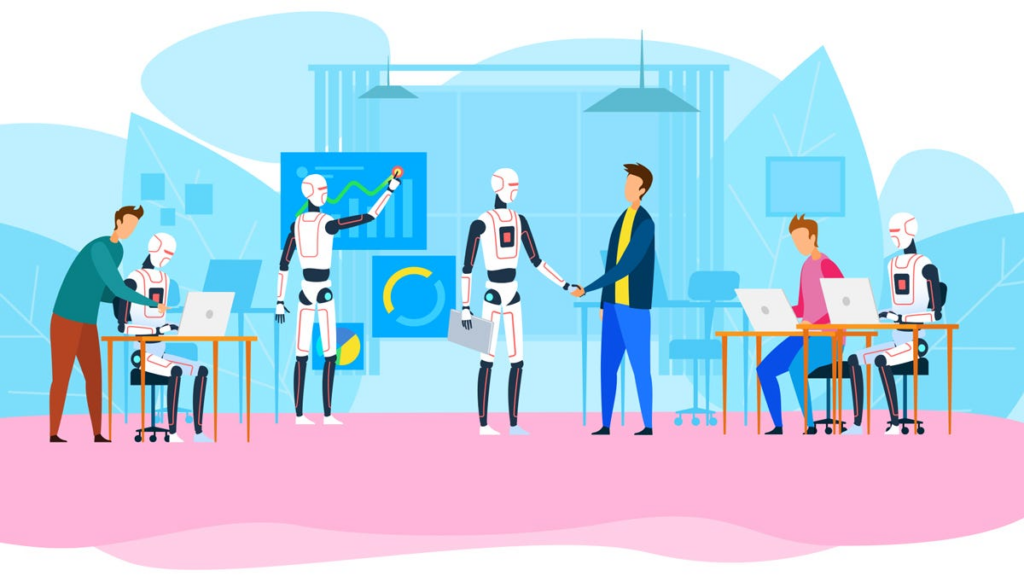
Traditional AI tools respond to instructions—they wait, execute, and stop. Agentic AI represents a shift: systems that can set goals, plan steps, take actions, monitor outcomes, and adapt with minimal human input. This evolution moves AI from being passive tools to active co-workers that collaborate with humans across tasks and workflows.
Agentic AI refers to AI systems designed with autonomy and agency. They don’t just answer prompts; they can:
- Define sub-goals
- Choose tools and data sources
- Execute multi-step plans
- Learn from feedback and adjust actions
In short: Agentic AI can act, not just respond.
How Agentic AI Is Different from Traditional AI
| Traditional AI (Tools) | Agentic AI (Co-Workers) |
|---|---|
| Reacts to prompts | Proactively pursues goals |
| Single-step outputs | Multi-step planning & execution |
| Human-in-the-loop for every step | Human-on-the-loop (oversight) |
| Limited context | Maintains task memory & state |
Real-World Examples
- Software Development: An agent plans a feature, writes code, runs tests, fixes bugs, and opens a pull request.
- Business Ops: An agent monitors KPIs, detects anomalies, drafts reports, and recommends actions.
- Customer Support: An agent resolves tickets end-to-end, escalating only complex cases.
- Marketing: An agent researches audiences, drafts content, schedules posts, and analyzes performance.
Why Agentic AI Is Rising Now
- Better Models: Strong reasoning and long-context capabilities
- Tool Integration: APIs, browsers, databases, and code execution
- Memory & Planning: Persistent state and task decomposition
- Economic Pressure: Need for productivity and scale
The “Human Premium”: Skills AI Still Can’t Replicate
As AI becomes more powerful, human skills that machines cannot fully copy become more valuable. This unique value is called the Human Premium. It represents skills based on emotion, creativity, ethics, judgment, and human experience that AI can assist with—but not replace.
1 . Emotional Intelligence and Empathy
AI can analyze emotions based on data, but it cannot genuinely feel empathy. Humans understand emotions through lived experiences, cultural context, and intuition. Skills like empathy, compassion, and emotional awareness are critical in roles involving leadership, healthcare, counseling, teaching, and customer relationships. These human connections build trust—something AI cannot authentically create.
2. Creativity and Original Thinking
AI generates content based on existing patterns, but true creativity comes from imagination, curiosity, and originality. Humans create new ideas, art, stories, and innovations inspired by emotions, failures, and personal experiences. This ability to think beyond data and invent something truly new remains a uniquely human strength.
3. Critical Thinking and Complex Decision-Making
AI follows logic and rules, but humans excel at critical thinking—questioning assumptions, understanding context, and making decisions in uncertain or ethically complex situations. Humans can weigh moral values, long-term consequences, and social impact, which are difficult for AI to fully understand or prioritize.
4. Leadership, Ethics, and Responsibility
Leadership is not just about making decisions—it’s about inspiring people, resolving conflicts, and taking responsibility. Humans lead with vision, values, and accountability. Ethical judgment, fairness, and moral responsibility are deeply human qualities that AI cannot independently own or
5. Why the Human Premium Mattersexecute.
The future is not about humans versus AI , it’s about humans working with AI. As AI handles repetitive and data heavy tasks, human skills become even more valuable. Emotional intelligence, creativity, ethics, and leadership are the qualities that will define success in the AI era.
The Productivity Paradox: Why You’ll Work With AI, Not Be Replaced By It
As artificial intelligence becomes more common in workplaces, a common fear keeps coming up:
“Will AI replace my job?”
But reality tells a different story. Instead of replacing humans entirely, AI is creating a productivity paradox—it increases efficiency so much that human roles evolve rather than disappear. The future of work is not humans vs AI, but humans working alongside AI.
1 .What Is the Productivity Paradox?
The productivity paradox means that while technology dramatically boosts efficiency, it doesn’t eliminate the need for humans. Instead, it changes how humans work.
AI can:
- Process data faster
- Automate repetitive tasks
- Generate drafts, reports, and insights
But it cannot:
- Understand context like humans
- Make ethical or emotional decisions
- Replace creativity, leadership, and judgment
As a result, humans move from doing repetitive work to doing higher-value work
.
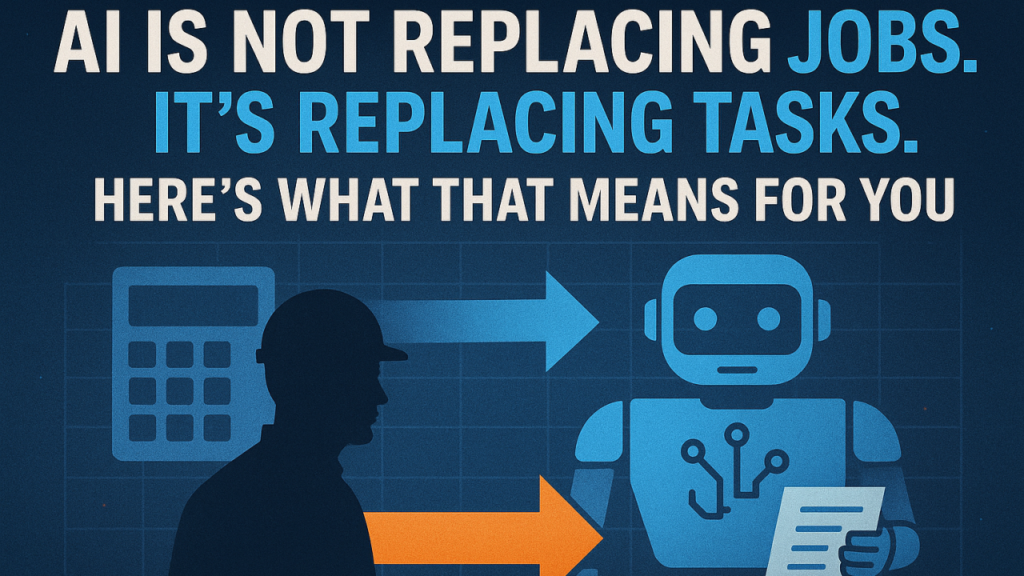
2. Why AI Replaces Tasks, Not Jobs
Jobs are made up of many tasks, and AI usually replaces only the repetitive or time-consuming parts.
For example:
- Writers use AI for drafts → humans refine and add originality
- Office workers use AI for reports → humans interpret and decide
- Developers use AI for code suggestions → humans design systems
This shift frees people to focus on thinking, strategy, and creativity rather than routine execution.
3. Why Humans Will Always Be Needed
AI lacks:
- Emotional intelligence
- Moral judgment
- Real-world experience
- Accountability
Humans provide:
- Trust and empathy
- Leadership and responsibility
- Creativity and intuition
This is why AI works best as a tool, not a replacement.
The Rise of “Agentic AI” Operations
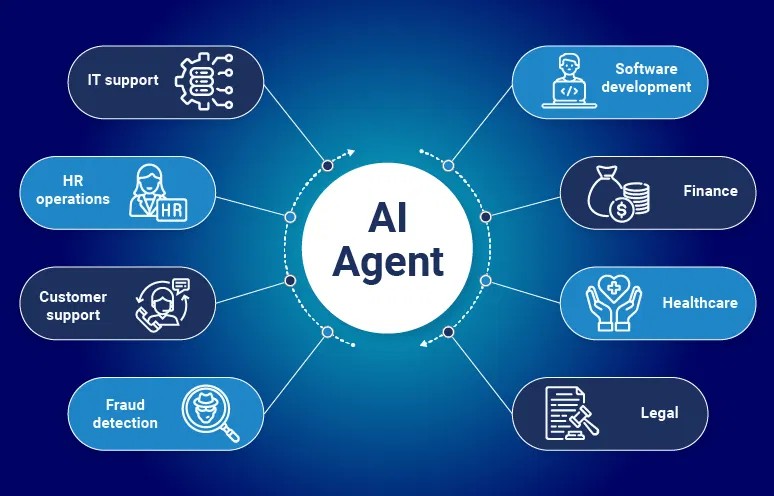
Artificial Intelligence is entering a new phase Agentic AI. Unlike traditional AI that waits for instructions, agentic AI systems can plan, decide, and act autonomously to achieve goals. This shift is transforming how organizations run operations, automate workflows, and scale decision-making.
How Agentic AI Differs from Traditional AI
Traditional AI
- Reacts to prompts
- Performs single tasks
- Requires frequent human input
Agentic AI
- Plans multi-step workflows
- Coordinates tools and data sources
- Learns from feedback
- Operates with minimal supervision
This leap enables end-to-end automation, not just task assistance.
Key Use Cases of Agentic AI in Operations
- Workflow Orchestration – Agentic AI can manage entire workflows—triggering tasks, calling tools, handling exceptions, and reporting results.
- Customer Operations – Agents can triage tickets, gather context, propose solutions, and escalate only when necessary—cutting resolution time dramatically.
- Data & Reporting – From pulling data to generating insights and alerts, agents can run analytics cycles autonomously.
- Software & IT Ops – Agents monitor systems, detect anomalies, propose fixes, and even deploy patches with human approval gate
Entry-Level Disruption: The New Career Ladder
The traditional career ladder is changing fast. For decades, entry-level roles were the first step into any profession—where fresh graduates learned basic tasks, gained experience, and slowly moved up. Today, AI and automation are disrupting these entry-level positions, forcing a complete rethink of how careers begin and grow.
This shift doesn’t mean opportunities are disappearing—but it does mean the ladder looks very different now.
1 . How Entry-Level Jobs Traditionally Worked
Earlier, entry-level roles focused on:
- Data entry
- Basic reporting
- Documentation
- Routine customer support
- Assisting senior employees
These jobs helped newcomers:
- Learn workplace systems
- Understand industry basics
- Build confidence and skills
- Prepare for higher responsibility
They were learning roles, not productivity powerhouses.
2. Why Entry-Level Roles Are Being Disrupted
AI now performs many tasks that entry-level employees used to do:
- Drafting emails and reports
- Analyzing basic data
- Scheduling and coordination
- First-level customer queries
From a business perspective, AI is:
- Faster
- Cheaper
- Always available
- Consistent
As a result, companies are hiring fewer traditional juniors and expecting more capability from day one.
3. Why This Is Scary for Fresh Graduates
Many students now face a tough question:
“How do I gain experience if entry-level jobs disappear?”
Challenges include:
- Fewer beginner-friendly roles
- Employers demanding “experience” early
- Rapid skill obsolescence
- Fear of being replaced by AI
This anxiety is real but it’s only half the story.
The $5.5 Trillion Skills Gap
The world is facing a massive challenge known as the $5.5 trillion AI skills gap. This figure represents the estimated economic value lost because organizations are rapidly adopting AI technologies, but the workforce is not skilled enough to use, manage, or work alongside AI effectively.
This is not a lack of jobs it’s a lack of AI-ready skills.
1. What Is the AI Skills Gap?
The AI skills gap happens when:
- Companies adopt AI tools and systems
- Employees lack the skills to use them effectively
AI is advancing faster than education systems, corporate training, and traditional career paths can adapt. As a result, businesses invest in AI—but fail to unlock its full value due to skill shortages.
2. Why the AI Skills Gap Costs $5.5 Trillion
The $5.5 trillion loss comes from:
- Underutilized AI investments
- Poor AI implementation
- Slower decision-making
- Reduced productivity gains
- Increased dependency on a small pool of experts
Many organizations own AI tools but don’t know how to integrate them into daily operations—leading to wasted potential.
3. What’s Driving the AI Skills Gap?
AI Is Evolving Faster Than Humans Can Reskill
AI models, tools, and workflows change every year, while most skills training moves slowly.
Education Focuses on Degrees, Not AI Literacy
Most workers were never trained in:
- AI fundamentals
- Prompting and model interaction
- AI ethics and limitations
- Human-AI collaboration
AI Removes Traditional Entry-Level Learning
Many beginner tasks are automated, eliminating the “learning phase” where skills were once built.
Fear and Resistance to AI
Some workers avoid AI due to fear of job loss—making the gap wider
Final Conclusion: The Future of Work Is Human + AI
Across all the topics we’ve explored—AI tools for bloggers, agentic AI operations, entry-level disruption, the productivity paradox, the human premium, and the $5.5 trillion AI skills gap—one clear message stands out:
AI is not replacing humans. It is redefining how humans create value.
AI is transforming how work is done by automating routine tasks, accelerating productivity, and enabling entirely new ways of working. Entry-level roles are changing, career ladders are being reshaped, and organizations are moving toward agentic AI systems that can plan and act autonomously. At the same time, uniquely human skills—creativity, emotional intelligence, judgment, ethics, and leadership are becoming more important than ever.
The real challenge is not AI adoption, but human readiness. The growing skills gap shows that technology is moving faster than people and institutions can adapt. Those who learn to work with AI—by upskilling, experimenting, and combining AI efficiency with human insight—will thrive. Those who resist or ignore this shift risk being left behind, not because AI replaces them, but because others use AI better.
In the end, the future of work belongs to:
- Humans who embrace continuous learning
- Professionals who treat AI as a collaborator, not a threat
- Organizations that invest in people, not just technology
AI may change jobs, workflows, and career but humans remain at the center.
The winners in the AI era will be those who understand one simple truth:
Technology creates power.
Human skill gives it direction.
Next blog: AI Tools for Bloggers and Content Creators
Pingback: AI Tools for Bloggers and Content Creators - Logic Layers